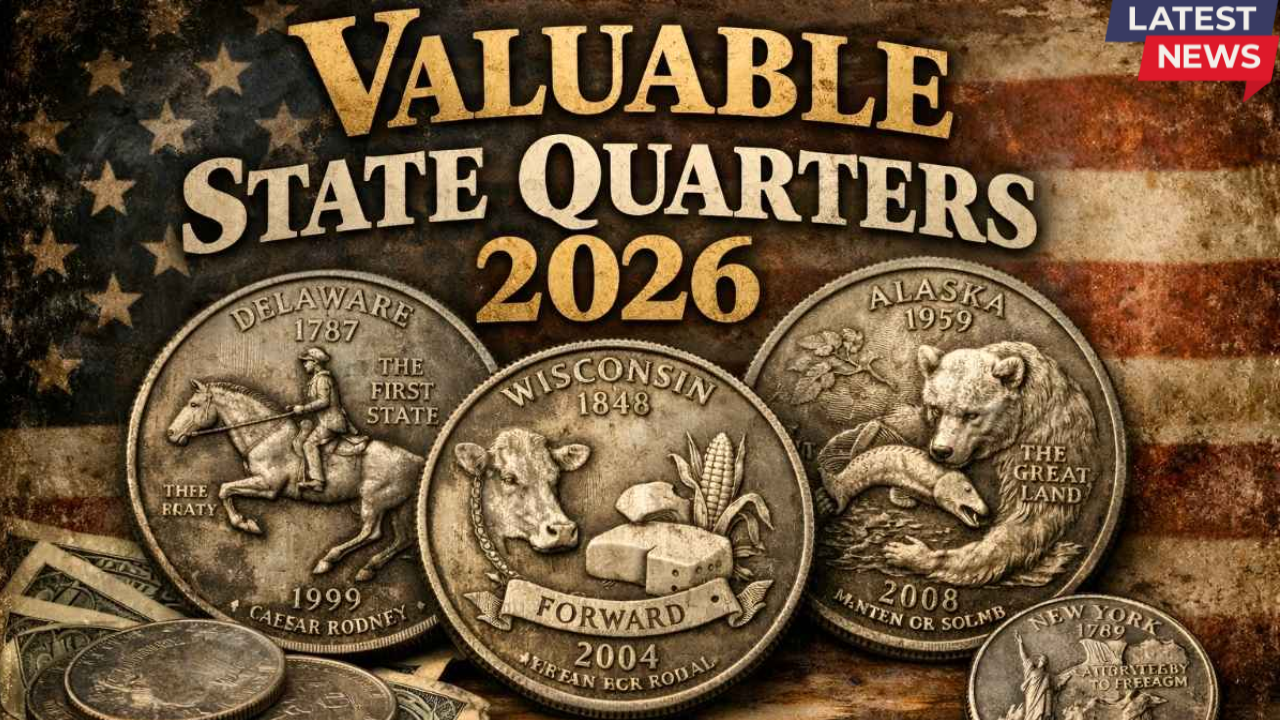
Valuable State Quarters 2026: The State Quarters Program, launched in 1999 and completed in 2008, remains one of the most popular coin series in U.S. history. Each quarter highlighted a different state with unique reverse designs, creating a collection of fifty coins that captured the nation’s heritage. Even years after the program ended, these coins continue to circulate, and some rare varieties have become highly valuable. In 2026, collectors and everyday people alike are still finding treasures in their pocket change, with certain error coins and scarce issues worth far more than their face value.
Why State Quarters Are Valuable
Most State Quarters are common, but specific varieties stand out due to minting errors, low production numbers, or unique design features. Collectors prize these coins because they represent anomalies in the minting process or rare circumstances that make them scarce. The value of a State Quarter depends on factors such as rarity, condition, and demand among collectors. Some coins can be worth a few dollars, while others have sold for hundreds or even thousands.
Common Types of Errors in State Quarters
Several types of errors make State Quarters valuable:
- Doubled dies: Design elements appear doubled due to mistakes in die preparation.
- Off-center strikes: The coin’s design is misaligned, leaving blank areas.
- Broadstrikes: The coin expands beyond its normal diameter when struck without a collar.
- Wrong planchet strikes: A quarter is struck on a blank intended for another denomination.
- Clipped planchets: A portion of the coin is missing due to a miscut blank.
These errors are visually distinctive and can significantly increase a coin’s value.
Notable Rare State Quarters
Several State Quarters are especially famous among collectors:
- 2004 Wisconsin Quarter Extra Leaf Error: Some coins feature an extra leaf on the corn stalk, either high or low. These varieties are among the most valuable, often selling for hundreds.
- 2005 Kansas Quarter “In God We Rust” Error: A weak strike caused the “T” in “Trust” to appear missing, creating a quirky and collectible variety.
- 2000 New Hampshire Quarter Misprint: Certain coins show doubling in the design, making them highly sought after.
- 2002 Ohio Quarter Wrong Planchet Strikes: A few coins were struck on planchets intended for other denominations, making them rare and valuable.
How to Spot Rare Quarters in Your Change
Collectors and casual enthusiasts can identify rare State Quarters by carefully examining coins for unusual features. Using a magnifying glass or coin loupe helps spot doubling, misaligned strikes, or missing details. Weighing coins can reveal wrong planchet strikes, while inspecting edges can uncover missing or doubled inscriptions. Knowledge of known varieties is essential, as it allows collectors to recognize valuable coins quickly.
The Role of Condition and Grading
Condition plays a crucial role in determining the value of a State Quarter. Coins are graded on a scale from circulated to mint state, with higher grades commanding higher prices. Professional grading services such as PCGS and NGC authenticate coins and assign grades, providing assurance to buyers and sellers. A rare error coin in mint condition can be worth significantly more than the same coin in circulated condition.
Collecting Strategies for State Quarters
Collectors often focus on building complete sets of State Quarters, but many also specialize in error varieties. Searching through pocket change, coin rolls from banks, or collections inherited from family members can yield valuable finds. Attending coin shows and auctions provides opportunities to acquire rare varieties. Patience and knowledge are key, as spotting valuable coins requires careful examination and awareness of known errors.
Investment Potential of Rare Quarters
Rare State Quarters offer investment potential due to their scarcity and demand among collectors. While not every coin is worth a fortune, certain varieties have consistently appreciated in value. The Wisconsin Extra Leaf Quarter, for example, remains a strong performer in the market. Investors view rare coins as tangible assets that can diversify portfolios and provide long-term returns.
Cultural and Historical Significance
Beyond monetary value, State Quarters carry cultural and historical significance. Each design reflects a state’s heritage, landmarks, and contributions to the nation. Collectors cherish these coins not only for their rarity but also for the stories they tell about America’s history. The program introduced millions of people to coin collecting, sparking interest in numismatics across generations.
Conclusion Rare Treasures in Everyday Change
The State Quarters Program may have ended years ago, but its legacy continues in 2026. Rare varieties and error coins remain hidden in circulation, waiting to be discovered by sharp-eyed collectors. From doubled dies to wrong planchet strikes, these anomalies transform ordinary coins into valuable treasures. For enthusiasts and investors alike, State Quarters represent both historical artifacts and opportunities for financial gain. Spotting rare coins in your change is not just a hobby it’s a chance to uncover pieces of American history worth far more than twenty-five cents.