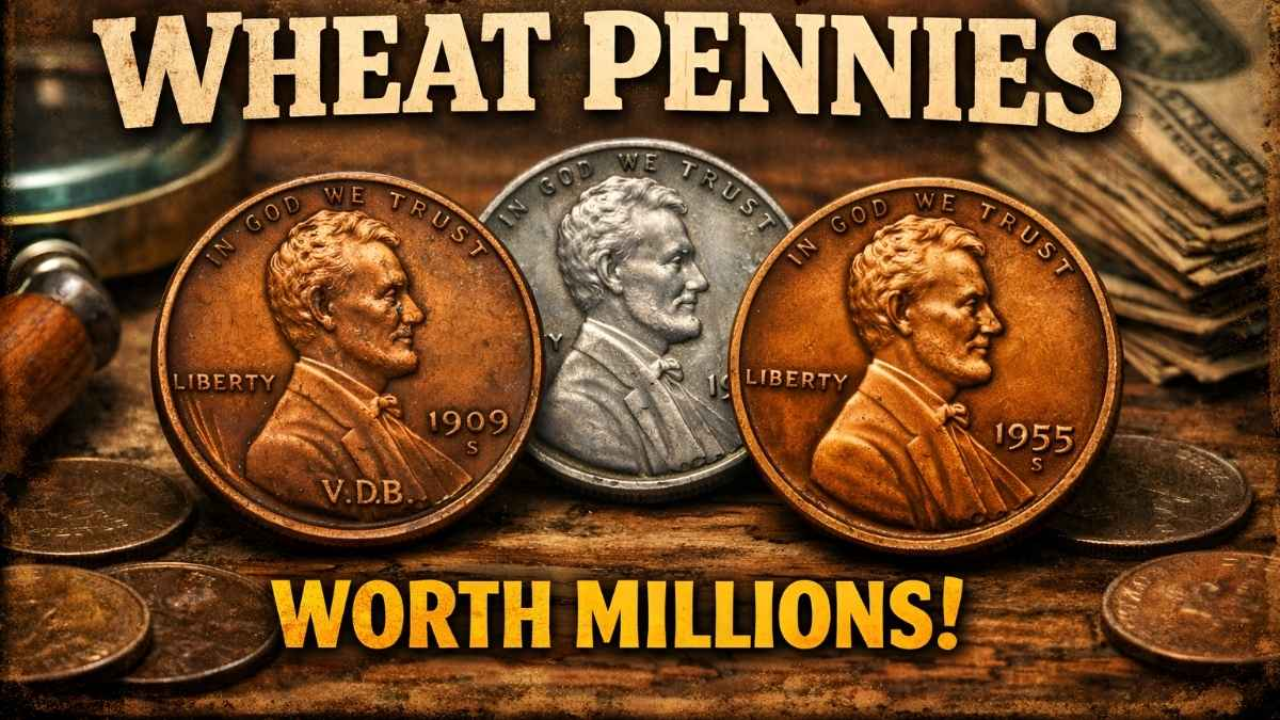
Lincoln Wheat Pennies — minted between 1909 and 1958 — were once everyday U.S. pennies, but today some rare dates and errors can be worth serious money. While most wheat pennies are worth just a few cents, the *right* ones can bring tens of thousands to millions at auction.
What Makes a Wheat Penny Valuable?
A penny’s value depends on several key factors: the year it was minted, the mint mark (P, D, or S), its condition (grading), and any minting errors. Coins with low mintages or unusual features are most sought after by collectors.
Top Rare Wheat Pennies & Estimated 2026 Values
| Coin Variety | Why It’s Rare | Value Range (Approx.) |
|---|---|---|
| 1909-S VDB | Low mintage & designer initials | $100,000 – $1,000,000+ |
| 1914-D | Scarce Denver issue | $20,000 – $200,000+ |
| 1922 “No D” | Missing mint mark error | $10,000 – $50,000+ |
| 1931-S | Low production in depression era | $100,000 – $500,000+ |
| 1943 Bronze (Error) | Accidental bronze planchet | $500,000 – $2,000,000+ |
| 1955 Doubled Die Obverse | Strong date doubling error | $50,000 – $125,000+ |
*These values are broad estimates based on auction records and collector markets in 2025-26. Exceptional grade coins (MS65 or higher) can exceed these ranges.*
Key Date Highlights
- 1909-S VDB: First Wheat Penny with designer Victor D. Brenner’s initials — one of the most iconic and expensive keys.
- 1914-D: Defined by extremely low mintage at the Denver Mint, making high-grade examples especially prized.
- 1922 No D: A striking error where the “D” mint mark is absent, boosting demand.
- 1931-S: Depression era rarity with strong collector appeal.
- 1943 Bronze: Perhaps the most legendary, struck in copper when most 1943 pennies were steel — extremely rare.
Errors That Can Boost Value
In addition to rare dates, some error coins command premium prices:
- Double Die Obverse (like the 1955 DDO)
- Off-center strikes
- Wrong planchet strikes (e.g., copper instead of steel)
Condition & Grading Impact
A wheat penny’s grade (from Good to Mint State) dramatically influences value. Coins graded by professional services like PCGS or NGC often bring significantly higher prices, particularly for rare dates and errors.
How to Spot a Valuable Penny
- Check the date and mint mark (under the date).
- Look for error characteristics like doubling or missing features.
- Assess the metal weight and magnet response — rare bronze instead of steel 1943 coins won’t be magnetic.
Final Thoughts
While most wheat pennies are still worth only face value or a few cents, a small handful — particularly rare keys and high-grade errors — can be worth fortunes. If you find old pennies from 1909–1958 in drawers, jars, or collections, it’s always worth checking them against a price guide — you might be holding a piece of history worth much more than their face value.
For serious collectors, investing in rare wheat pennies can be both a passion and a profitable hobby.